Free Printable 19th-Century American Bird Illustrations from American Ornithology
Overview
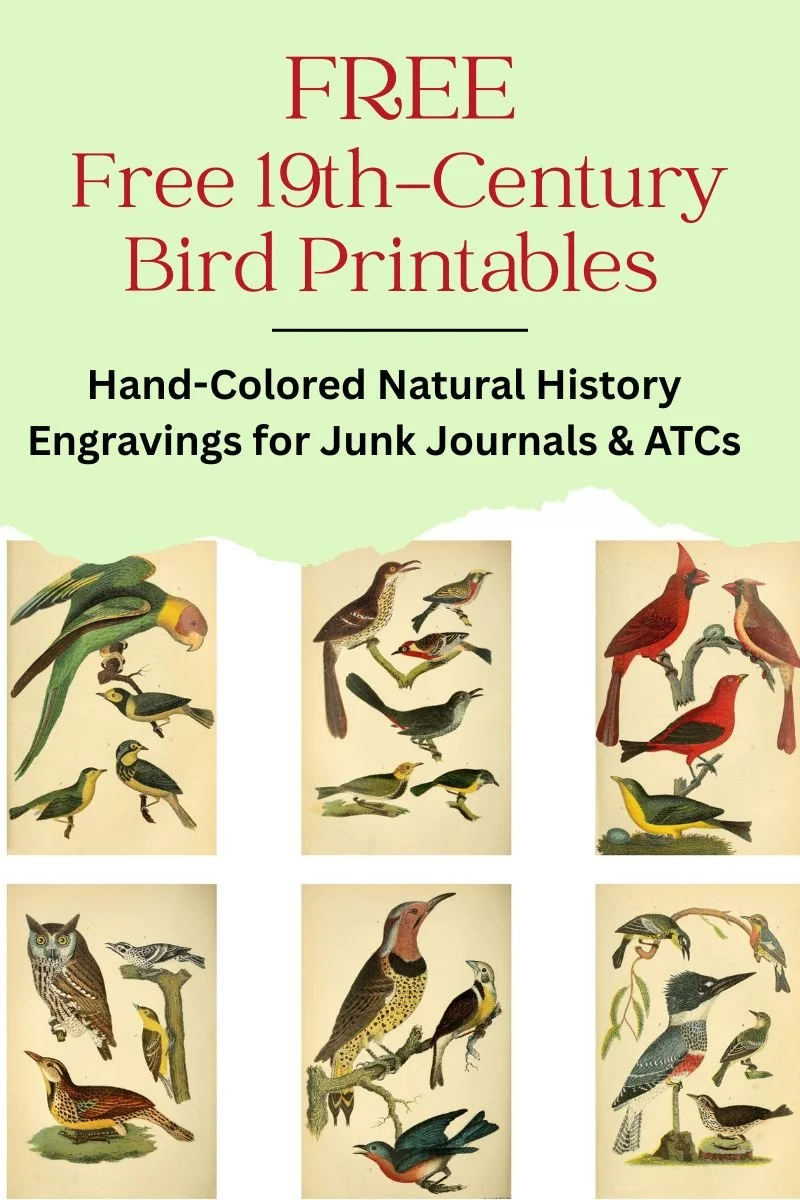
Free printable 19th-century American bird illustrations
Sourced from American Ornithology; or, The Natural History of the Birds of the United States
Created by early American ornithologist Alexander Wilson
Hand-colored, engraved natural history plates
Sized for junk journals, ATCs, scrapbooking, and mixed media collage
Public domain artwork from early American scientific illustration
If you love vintage natural history artwork, this one is special.
Today’s free printable collage sheets feature early 19th-century American bird illustrations from American Ornithology; or, The Natural History of the Birds of the United States by Alexander Wilson.
These aren’t just pretty bird pictures. They’re part of one of the earliest comprehensive studies of American birds, created long before photography, field guides, or modern printing.
And now they’re formatted and resized for your journals, scrapbooks, and mixed media projects.
About American Ornithology (Early 19th-Century Bird Study)
Published beginning in 1808, American Ornithology was a groundbreaking work documenting birds of the United States. At the time, the country was still young, and so was its scientific identity.
Alexander Wilson is often called the father of American ornithology. His detailed observations and engraved plates helped establish bird study as a serious scientific discipline in the United States.
Years later, figures like John James Audubon would become more widely known. But Wilson laid the groundwork.
His illustrations combine scientific precision with artistic composition. Each bird is carefully posed, labeled, and rendered in hand-colored engraving, creating images that are both educational and visually striking.
That blend of science and art is exactly why they work so beautifully in collage and journaling.
The Art of Hand-Colored Copperplate Engravings
Before photography, documenting wildlife required extraordinary skill.
These illustrations were created using copperplate engraving, which was a painstaking process in which an image was carved into a metal plate, inked, pressed onto paper, and then often hand-colored.
The result?
Rich line detail
Soft but vivid coloration
A slightly aged warmth that modern printing can’t replicate
Natural history plates like these were meant to educate, but they were also elegant. There’s something timeless about engraved birds perched on branches, frozen mid-song or mid-flight.
When you use them in your projects, you’re layering in a piece of early American scientific history, not just decoration.
What’s Included in the Free Printable Set
I’ve reformatted these public domain bird illustrations into collage-friendly layouts for modern crafters.
You can download:
2x3 inch elements – perfect for ATCs and small journal clusters
2.5x4.25 inch vertical cards – ideal for tucks and pockets
3.5x5 postcard-style layouts – great for journaling focal points
Individual bird groupings from original natural history plates
High-resolution files ready for home printing
Each sheet is designed to save you time. No awkward reformatting. No hunting through massive archive scans. Just craft-ready vintage ephemera.
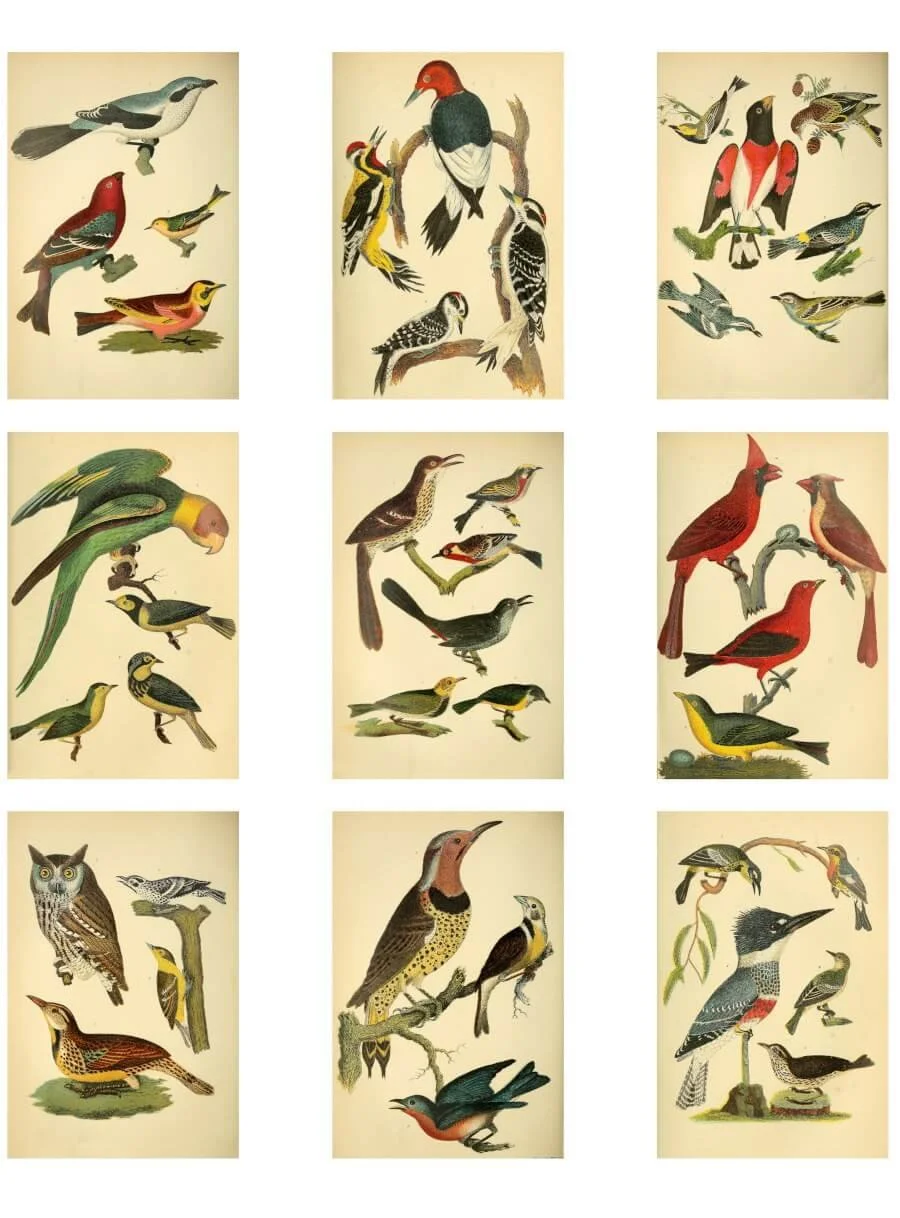
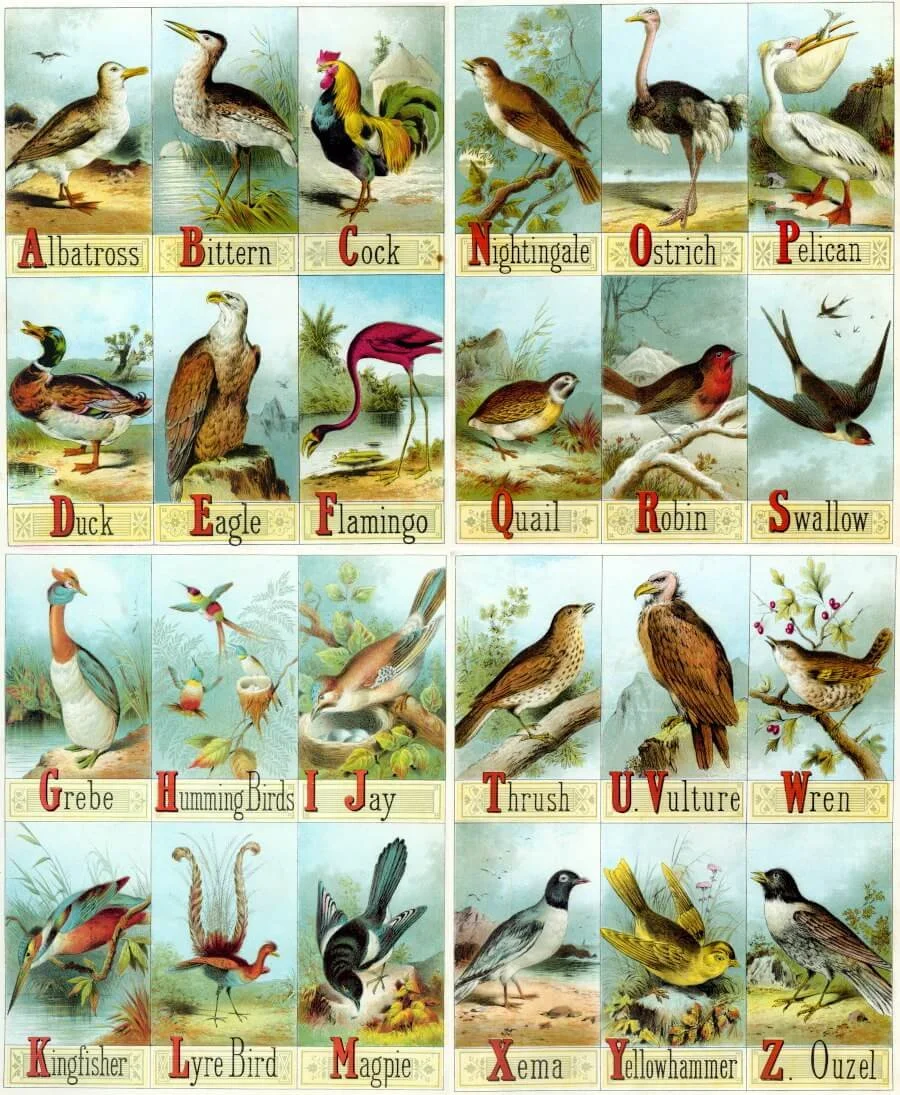
2” x 3” Journal Tags
Creative Ways to Use These Vintage Bird Illustrations
Let’s make this practical.
For Junk Journaling
These illustrations are perfect for:
Nature-themed spreads
Explorer or field journal aesthetics
Vintage science-inspired layouts
Layered ephemera clusters
Pair them with aged ledger paper, botanical labels, or handwritten notes for a cohesive 19th-century feel.
For Artist Trading Cards (ATCs)
The 2x3 inch format was designed with ATCs in mind.
These birds:
Fit within standard trading card dimensions (2.5” x 3.5”)
Make strong focal images
Layer beautifully with stamps and vintage typography
If you sell or swap ATCs, natural history imagery consistently performs well.
For Art Journaling
Try using them as:
Central focal images in mixed media spreads
Background layering pieces
Inspiration for nature-themed color palettes
You can even build an entire “early American naturalist” themed journal around these prints.
For Scrapbooking & Heritage Albums
Because these illustrations originate from early American scientific studies, they pair beautifully with:
Family history layouts
Americana themes
Outdoor and wildlife memories
They bring depth and historical resonance, not just decoration.
Why Early American Bird Illustration Still Resonates
There’s something powerful about these images.
They were created at a time when the United States was still defining itself. Cataloging native birds wasn’t just scientific curiosity. It was cultural identity.
These plates represent:
Exploration
Observation
Careful documentation
Artistic craftsmanship
And visually? They strike a balance between realism and composition that feels surprisingly modern.
That’s why 19th-century natural history illustration continues to inspire artists, designers, and mixed-media creators today.
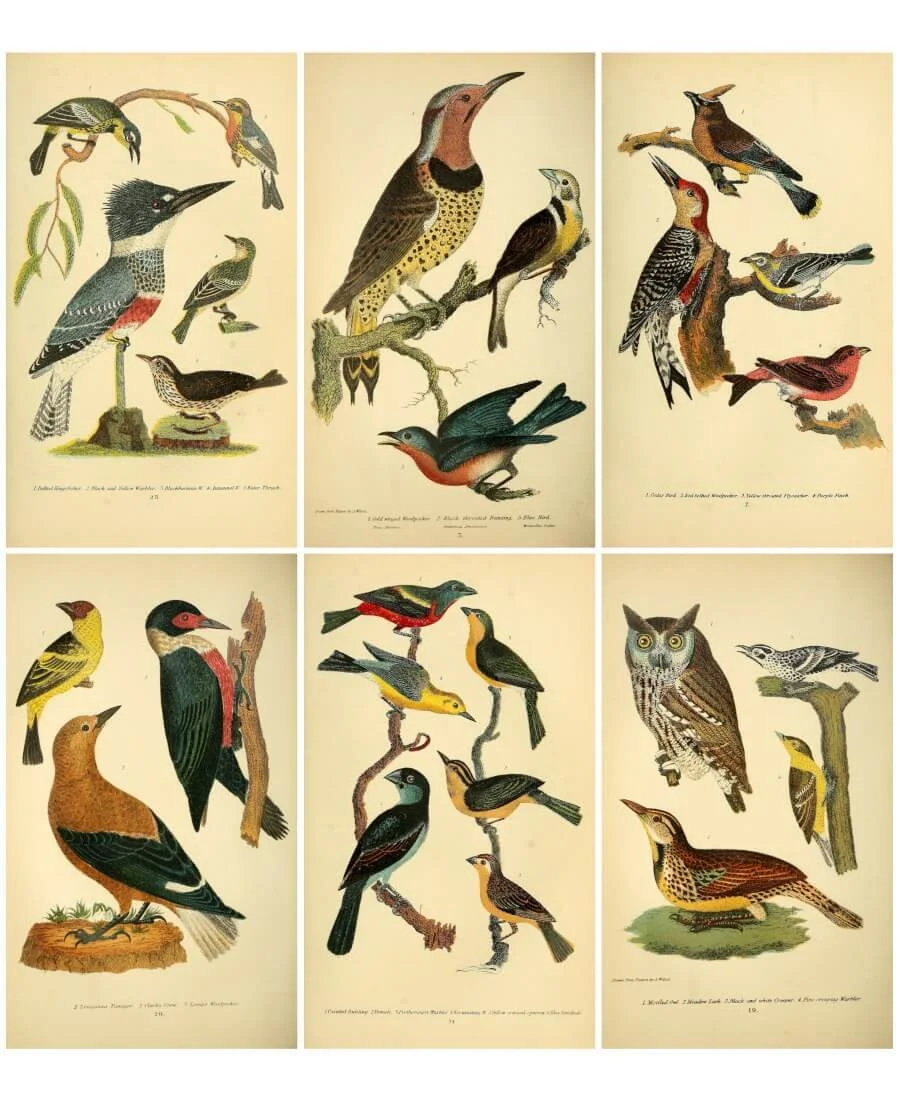
2.5” x 4.25” Journal Cards
Frequently Asked Questions
Who was Alexander Wilson?
Alexander Wilson was a Scottish-American naturalist and illustrator active in the early 1800s. He is widely regarded as the father of American ornithology for his pioneering work documenting birds native to the United States.
His multi-volume American Ornithology helped establish bird study as a scientific field in America.
What is American Ornithology?
American Ornithology; or, The Natural History of the Birds of the United States is an early 19th-century publication documenting American bird species through engraved and hand-colored plates.
It was among the first comprehensive ornithological works produced in the United States.
Are these bird illustrations in the public domain?
Yes. The original volumes were published in the early 1800s, which places the individual bird illustrations firmly in the public domain. That means the original artwork can legally be shared, reproduced, and adapted.
These files, however, have been carefully reformatted, resized, cleaned, and arranged into collage sheets specifically for The Art Scavenger.
You are welcome to print and use these sheets in your craft projects, journals, scrapbooks, and artwork. However, the curated collage sheets themselves may not be redistributed, resold, or shared in either digital or printed form.
If you’d like to share them, please link directly to this post so others can download the files here.
What paper works best for printing?
For best results:
Use matte cardstock (60–80 lb) for sturdy elements, or lightweight paper for layering in collages.
Choose presentation paper for richer color
Print at 100% scale for accurate sizing
If you’re making ATCs, heavier cardstock prevents warping when layering mixed media.
More Free Printables You Might Like
If you enjoy vintage natural history ephemera, you may also love:
Final Thoughts
These early 19th-century American bird engravings connect us to the roots of American natural history illustration.
They’re detailed. They’re elegant. They carry history. But most importantly, they’re usable.
Instead of living in archive scans or academic collections, they can become part of your journals, your collage work, and your creative experiments. That’s the magic of public domain art.
Download the sheets and give these birds a second life in your next project.
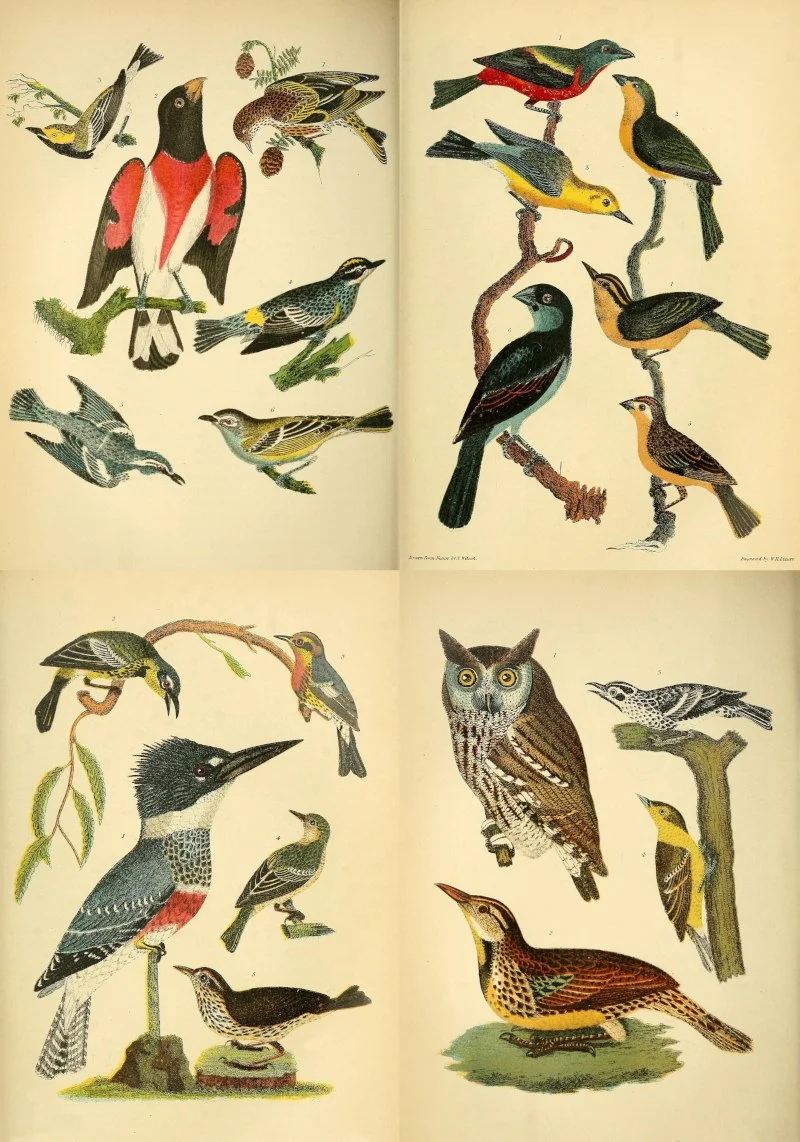
3.5" x 5” Postcards
Collage Art Inspiration
I had so much fun creating this eclectic art journal page around one of the gorgeous vintage bird illustrations. I started by building up a punchy, high-contrast background using torn vertical strips of painted book pages in lime green, layered over a painted background of bright pink and orange. The star of the show is definitely the bird image near the top left, featuring a striking green parrot perched above three smaller songbirds. I kept its torn, soft edges visible so it floats beautifully over the bold stripes. Finally, to anchor the bottom of the page, I layered a horizontal band of warm, torn orange paper and accented it with a delicate row of five framed monochrome portraits of 18th-century women, tying the whole playful, mismatched look together.
Other free images used: 18th-Century Women with Louis XVI Hairstyles
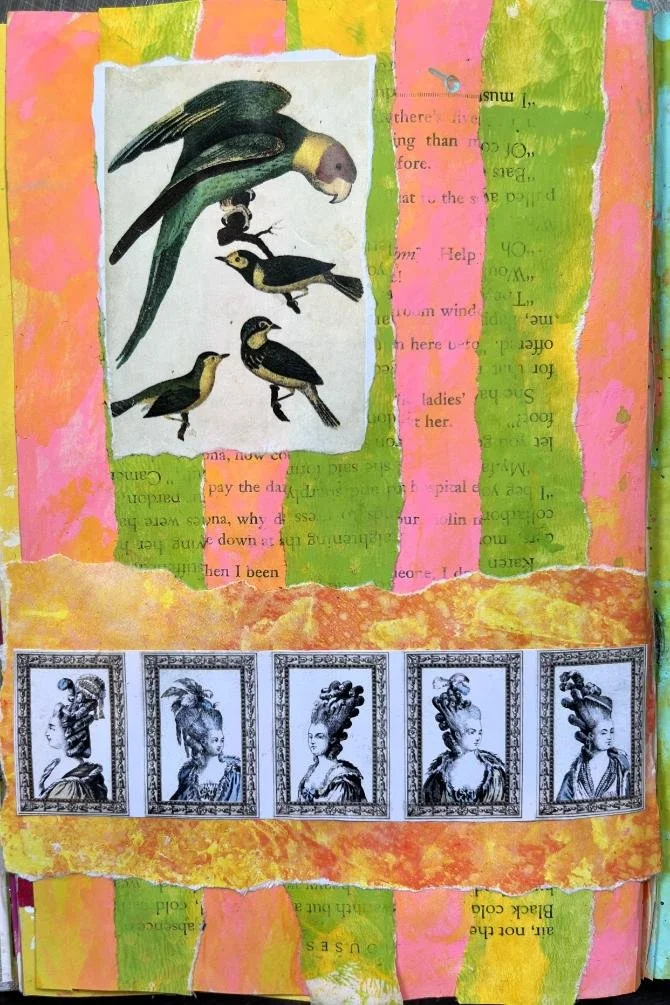
“Birds of a Feather” Mixed Media Collage
Love These Printables?
I love sharing free vintage printables, and if you enjoy them, there are easy ways to support my work so I can continue creating and offering more free designs:
You may also enjoy these free collage sheets.